Moon jar (dalhangari) is a traditional Korean vessel celebrated for its generous spherical form and quiet asymmetry. Its organic shape is created through gravity, shifting clay, and fluctuations in kiln temperature.
It embodies ideals of humility, naturalness, and understated beauty, embracing surface imperfections such as glaze drips, kiln marks, and subtle distortions rather than striving for perfection.
For the Tiger Moon Jar, charcoal black, iron brown, and mineral white glazes were carefully applied in layers and specks. Under the intense heat of the kiln, these layers melted and reacted with one another, forming a crystalline surface rich with depth and variation. The resulting texture evokes something weathered and geological, shaped by forces beyond the maker’s complete control.
10 × 10 × 12 in
Moon jar (dalhangari) is a traditional Korean vessel celebrated for its generous spherical form and quiet asymmetry. Its organic shape is created through gravity, shifting clay, and fluctuations in kiln temperature.
It embodies ideals of humility, naturalness, and understated beauty, embracing surface imperfections such as glaze drips, kiln marks, and subtle distortions rather than striving for perfection.
For the Tiger Moon Jar, charcoal black, iron brown, and mineral white glazes were carefully applied in layers and specks. Under the intense heat of the kiln, these layers melted and reacted with one another, forming a crystalline surface rich with depth and variation. The resulting texture evokes something weathered and geological, shaped by forces beyond the maker’s complete control.
10 × 10 × 12 in


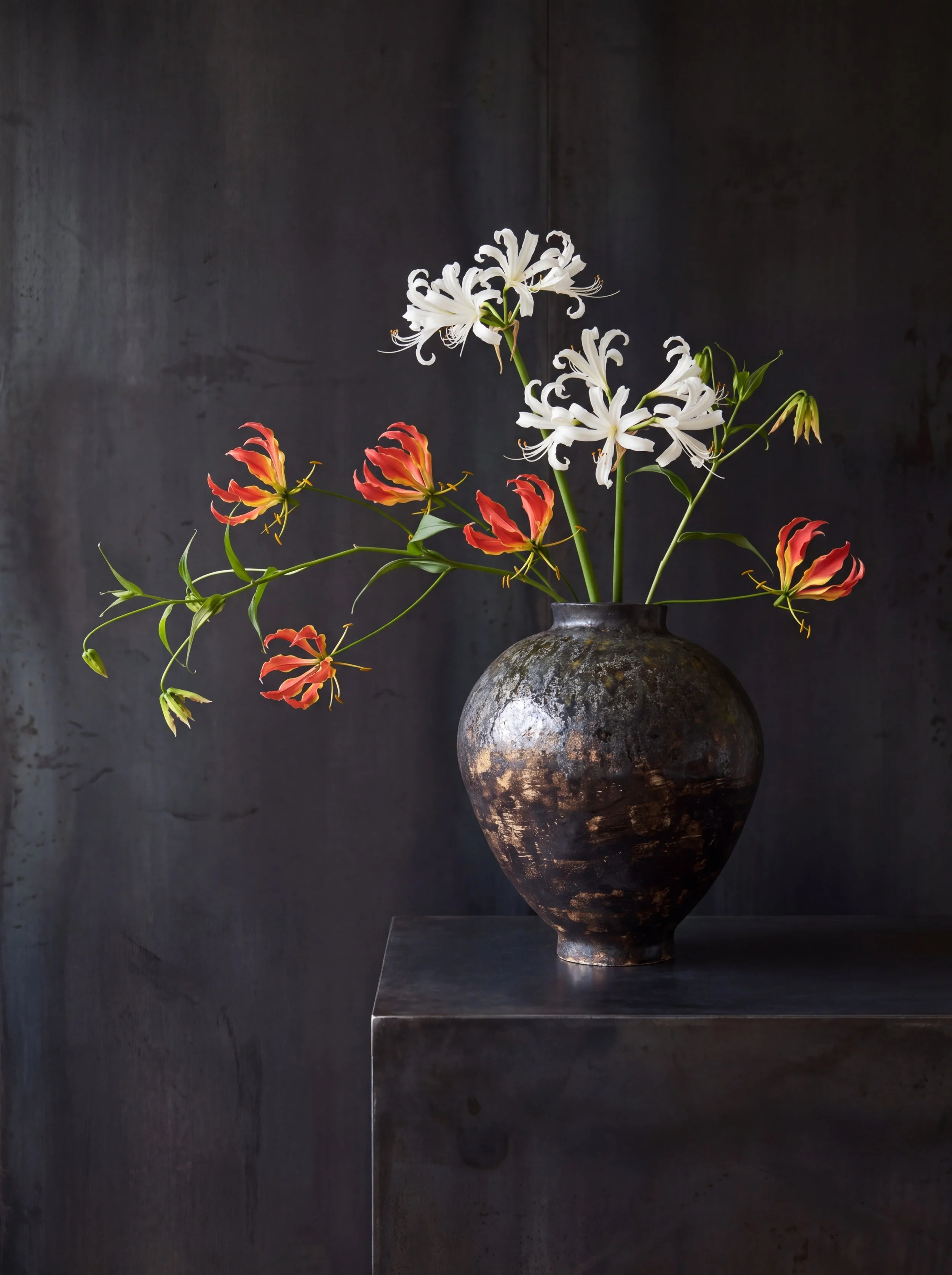 Image 1 of 10
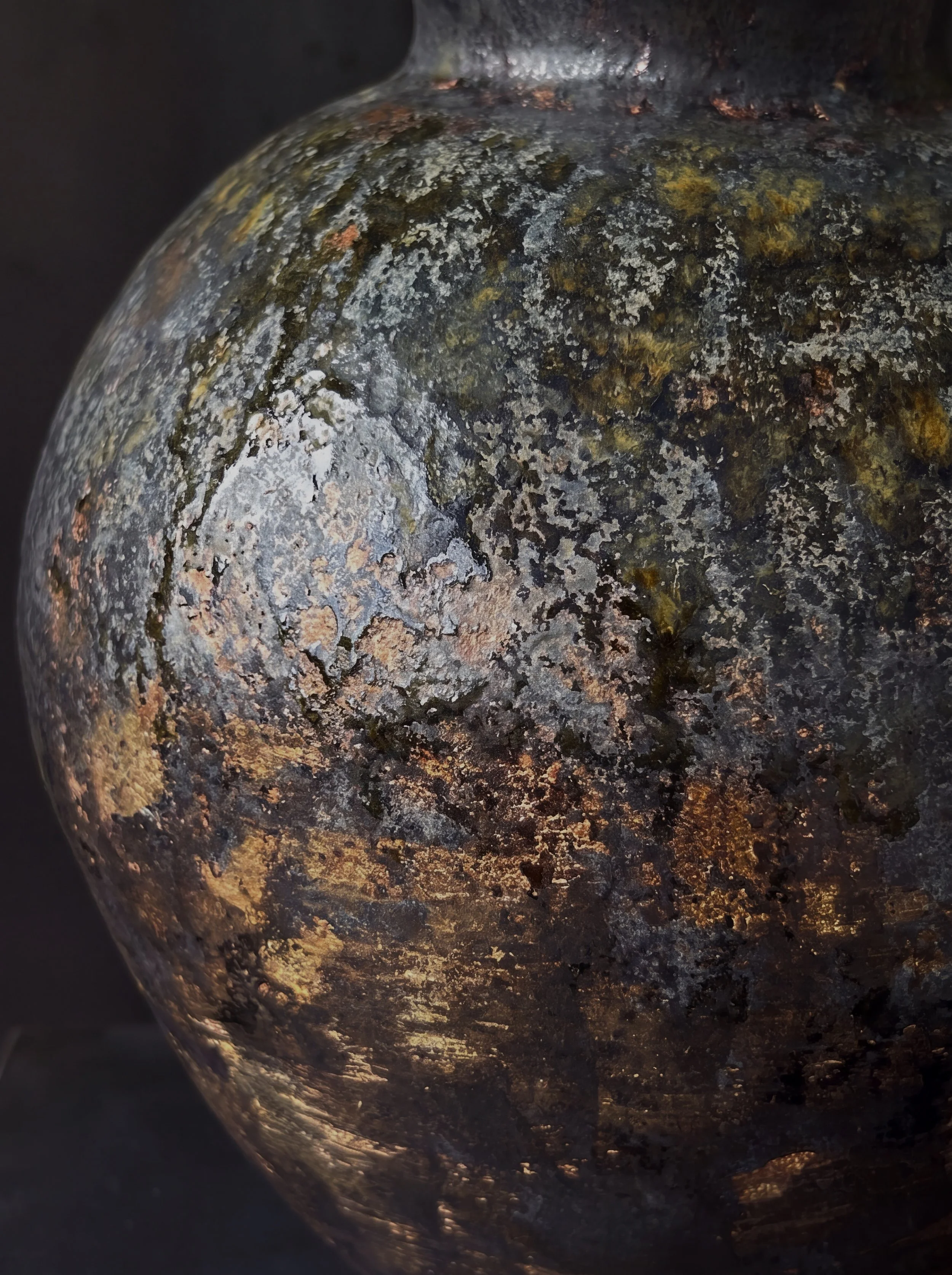 Image 2 of 10
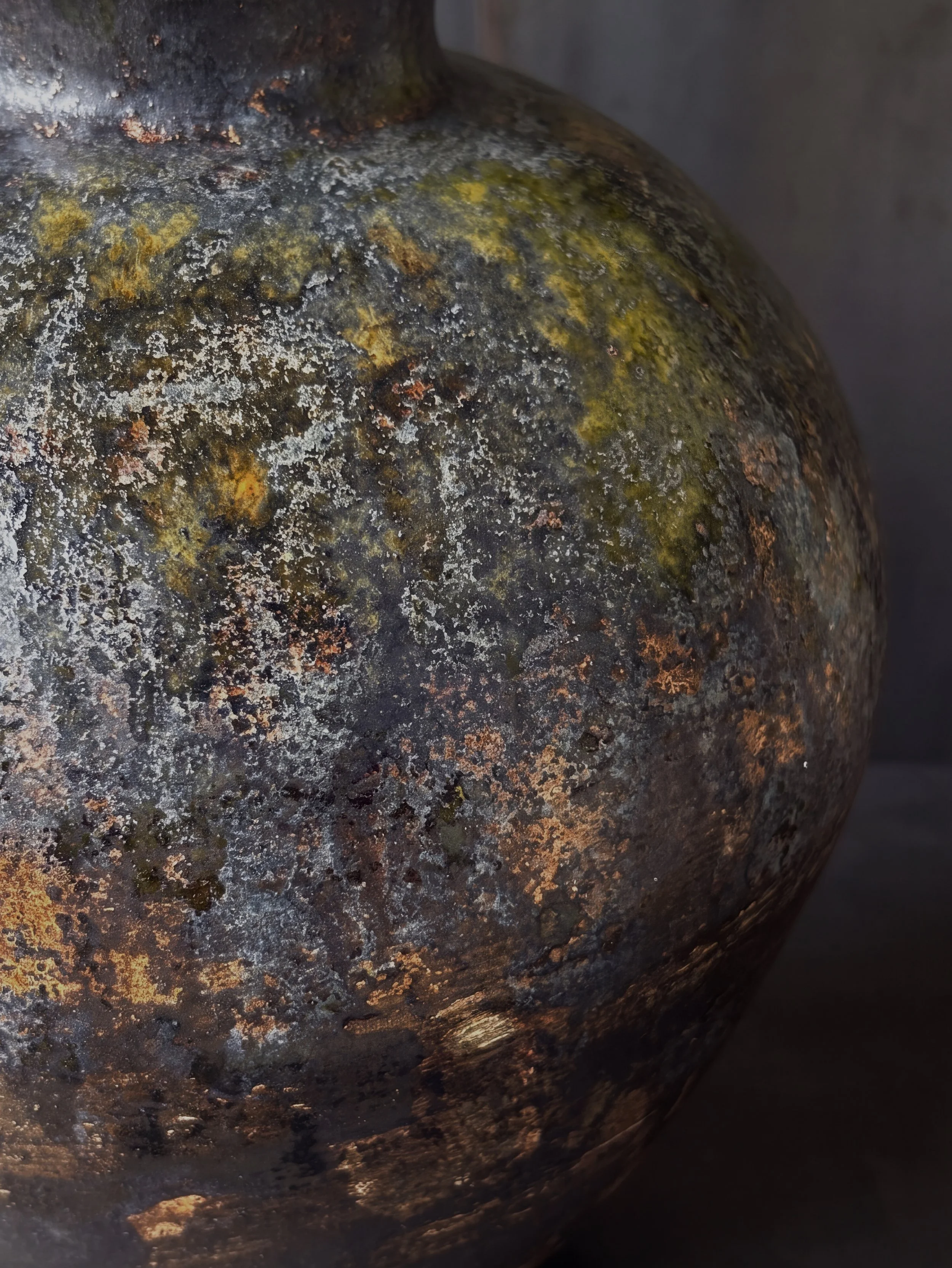 Image 3 of 10
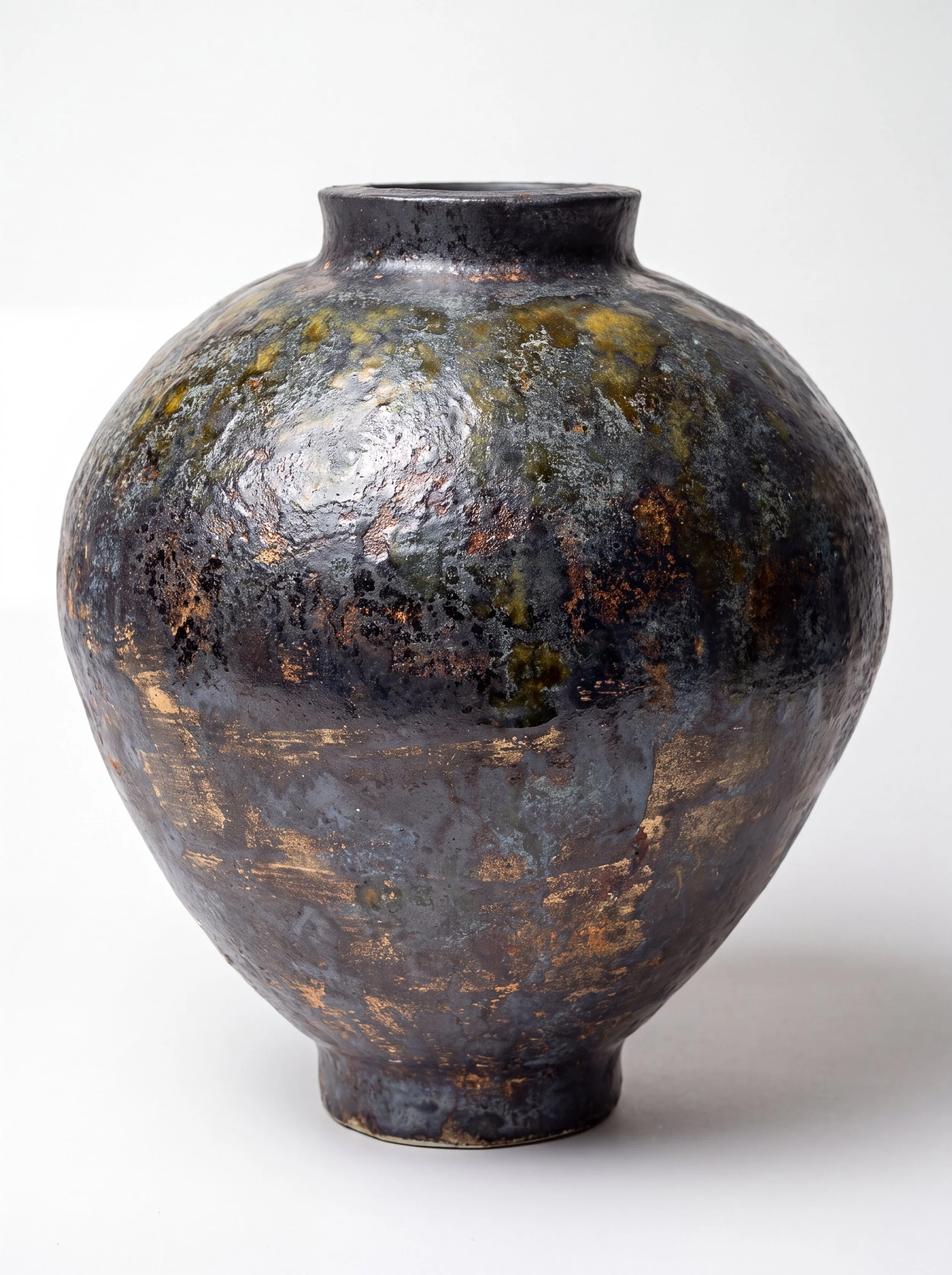 Image 4 of 10
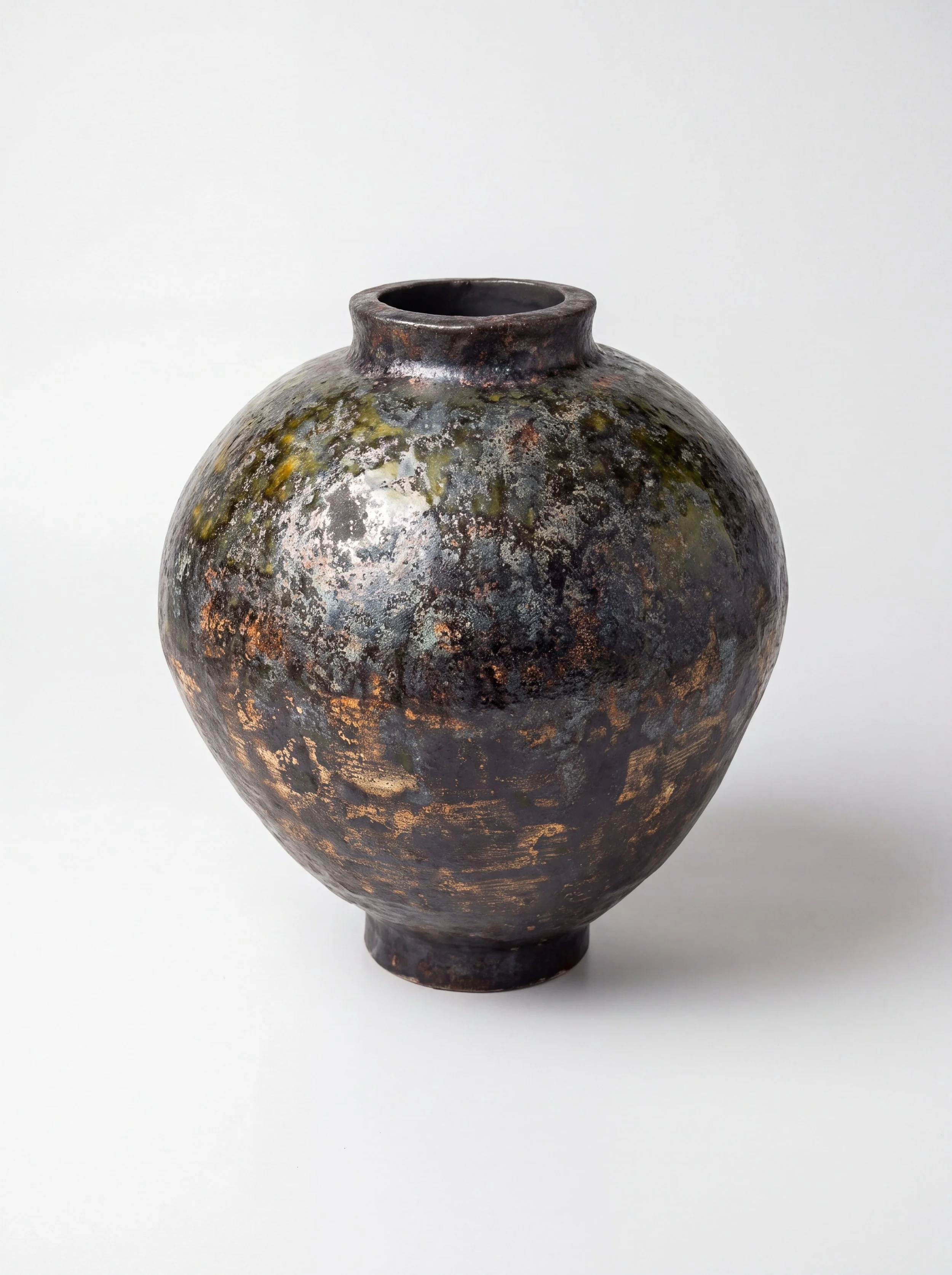 Image 5 of 10
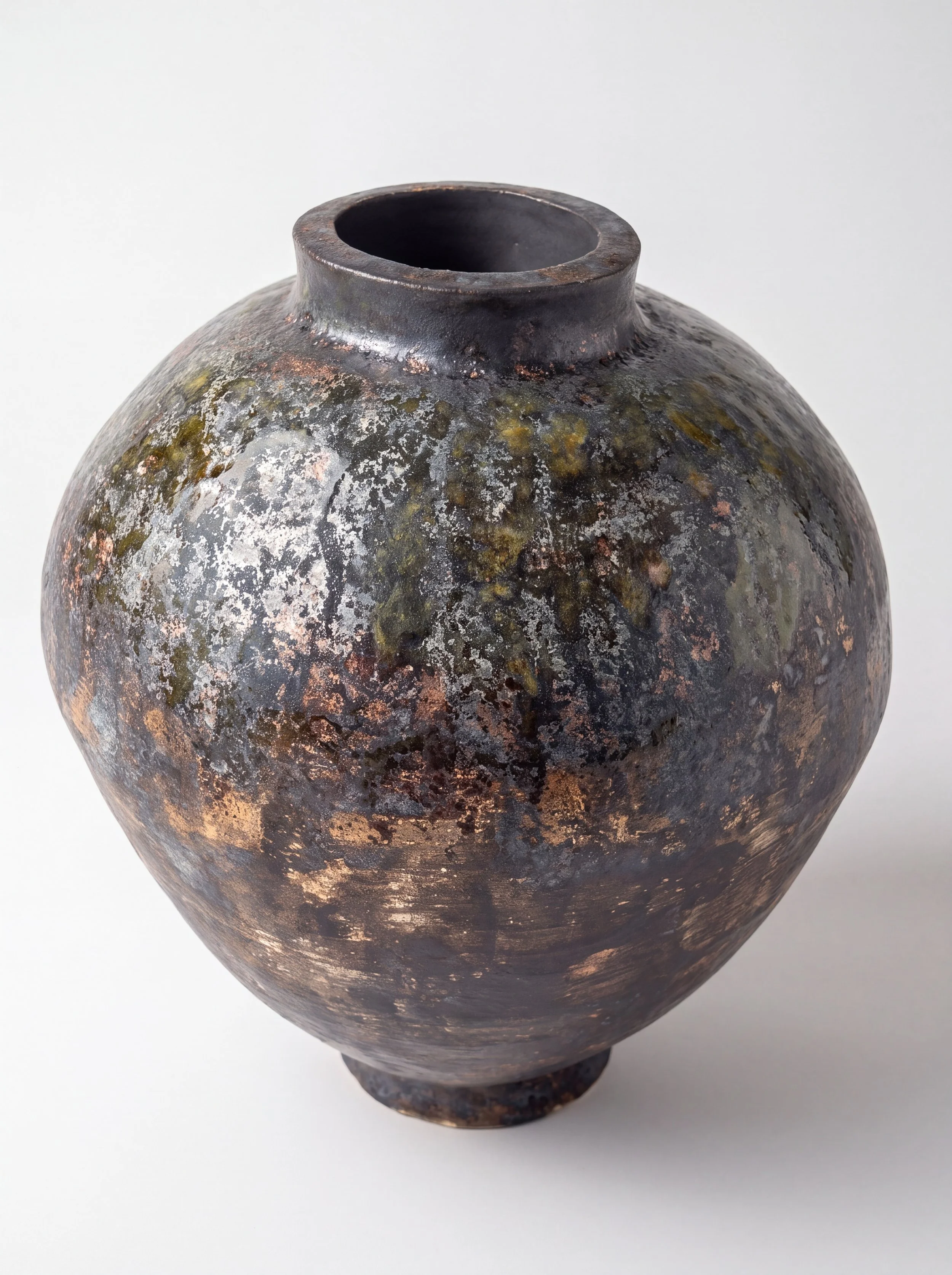 Image 6 of 10
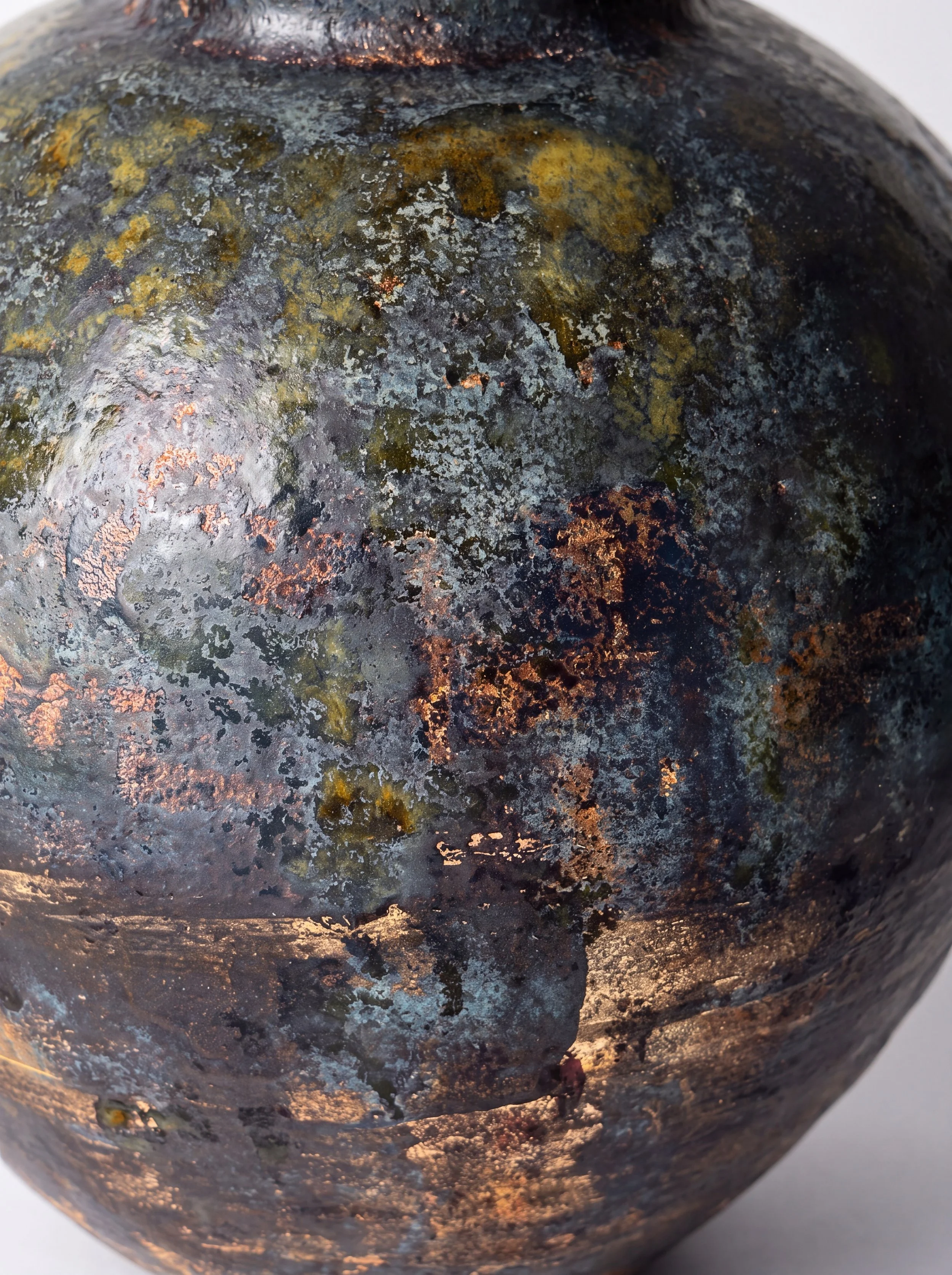 Image 7 of 10
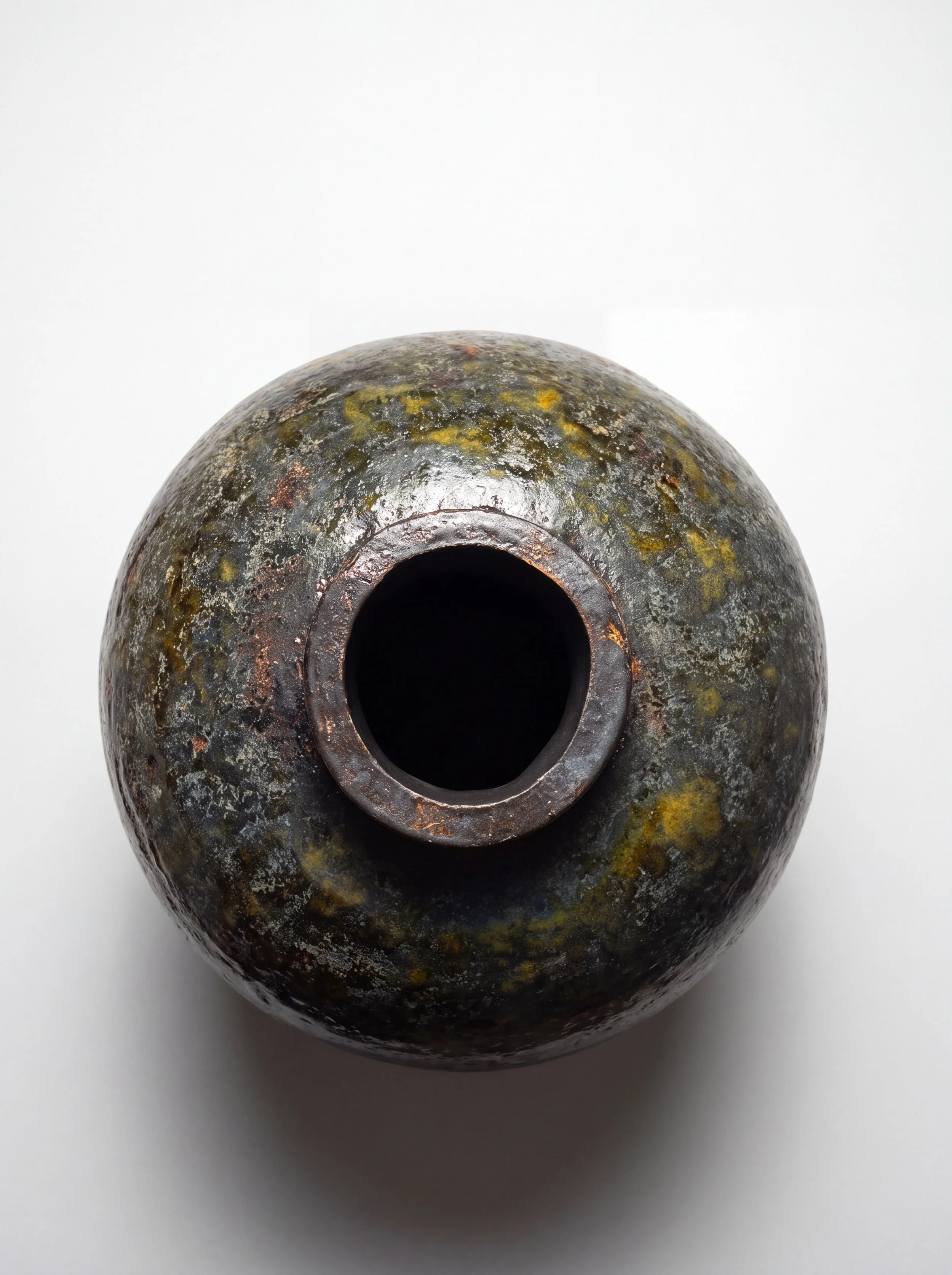 Image 8 of 10
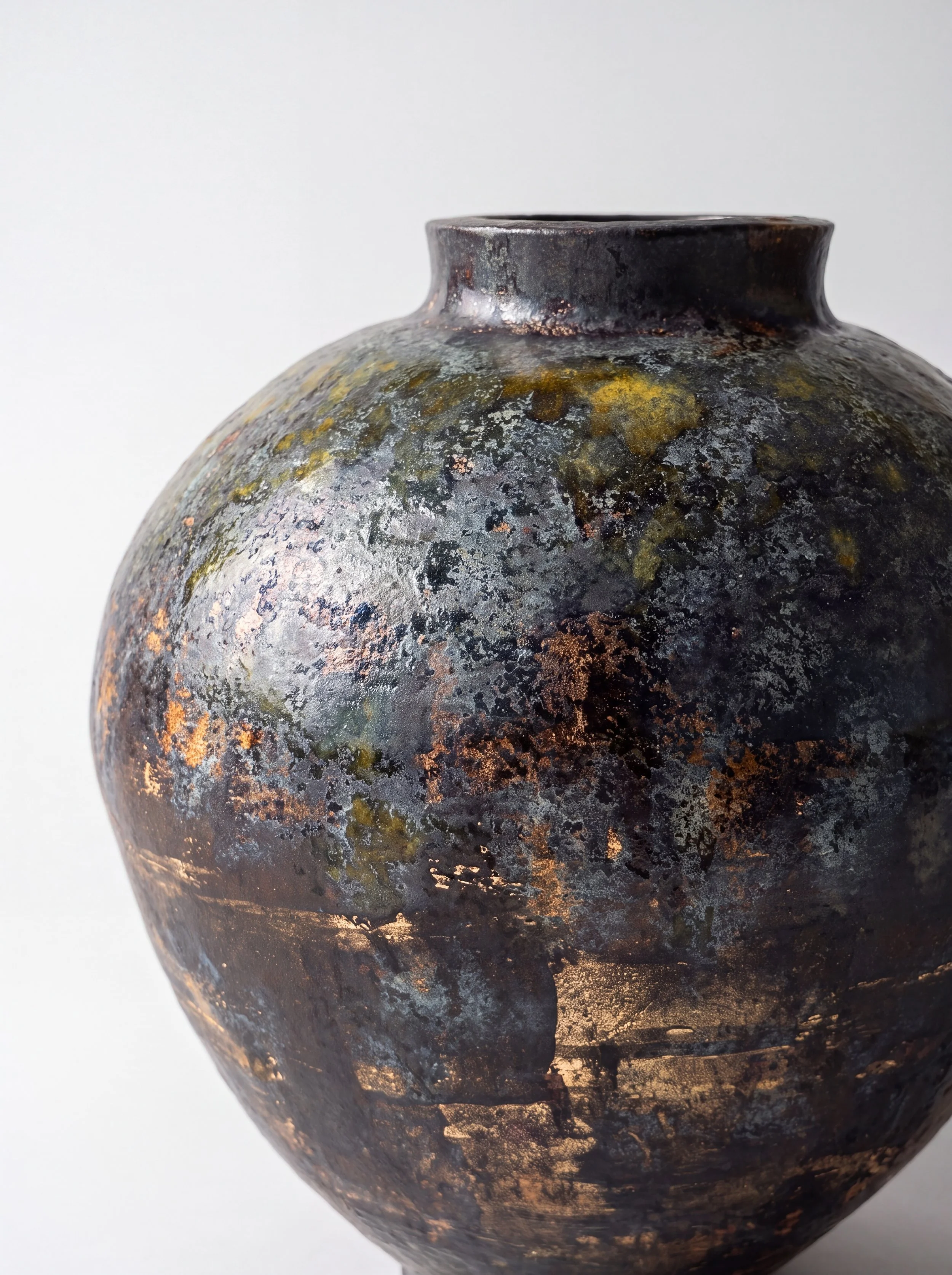 Image 9 of 10
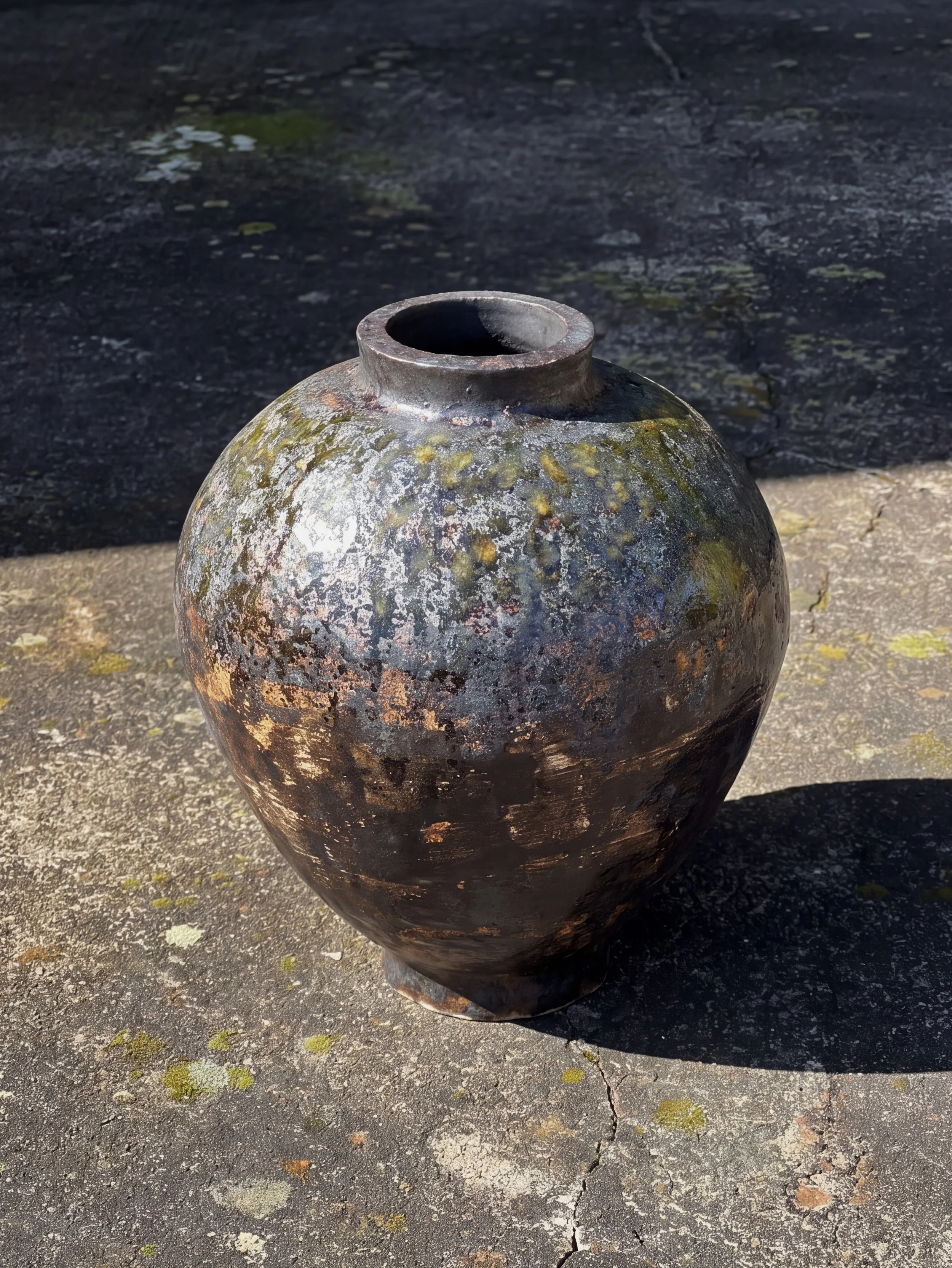 Image 10 of 10